navigation

PhotobucketPhotobucketPhotobucketPhotobucket
Showing posts with label Organic. Show all posts

Thursday, February 27, 2014

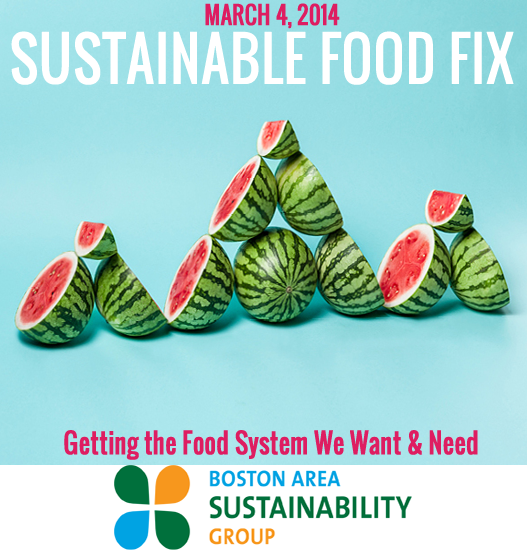
March Meeting of BASG will Tackle Food Systems


source image courtesy of Marion Luttenberger

WHEN: Tuesday, March 4, 2014 from 6:00 PM to 9:00 PM 

WHERE: The Venture Cafe - Cambridge Innovation Center, One Broadway, 5th Floor, Cambridge, MA 02142

WHAT: Our food system is extraordinarily complex with a myriad of stakeholders motivated by varying concerns of climate change, personal health, local economic development, social justice, financial returns, and other factors. What does the local landscape of food look like for us in New England and what does the future hold in terms of innovative partnerships and disruptive supply chain solutions?
Come hear from leaders, who will share a broad perspective of the food system, touching on diverse levers of change and influence including production capacity, regional collaboration, municipal regulation, industry advocacy, institutional procurement strategy, and investment in entrepreneurial food ventures.

Our program this evening will be introduced and moderated by Holly Fowler, drawing on her experience of developing and implementing international, sustainable food procurement standards for more than 6500 institutional clients and her most recent consulting work with diverse regional food system stakeholders. Panelists include:
  • Holly Fowler, Co-founder & Managing Director, Northbound Ventures, LLC
  • Alex Linkow, Program Director, Fair Food Fund
  • Edith Murnane, Director of the Office of Food Initiatives, City of Boston 
  • Tim Griffin, Associate Professor and Director of the Agriculture, Food and Environment Program, Friedman School of Nutrition Science & Policy, Tufts University

Wednesday, February 26, 2014

Cocobeet brings organic juices to Government Center


Yep, I am super into the green smoothie craze. Smoothies packed with kale, spinach, carrots, and beets are a great way to get a full day's nutrition in one sitting. And now there are a bunch of juice shops around Boston that can make smoothies to order and also offer ready-made beverages. One such business is newly-opened Cocobeet in City Hall Plaza. Cocobeet serves "organic, locally sourced, pure food meals and juices of the highest nutritional power." Cocobeet’s juices are raw and fresh. No pesticides or GMOs - and all of their juices are vegan! The only downside to Cocobeet is its prices - juices are $8 - $10, but I have to admit, they are totally worth the occasional splurge!

Wednesday, December 4, 2013

Spotlight: Sweetgreen


Founded in Washington DC in 2007, sweetgreen has become a favorite not only for its delicious and healthy fast food, but also for its commitment to local farmers, the community, and sustainability.

Each month, sweetgreen creates a special salad inspired by the season, using the freshest, local ingredients from nearby farms. And of course, the full menu also features locally sourced ingredients - all of which can be read about on the restaurant's blackboards.

Visit the new Back Bay location at 659 Boylston St. (and hopefully another location in the Seaport District will open soon!!!!)

To learn more about sweetgreen's mission (and to feel totally inspired) check out their story: https://www.youtube.com/watch?v=o2MNNPX_x1I

Wednesday, November 6, 2013

Spotlight: Follain

source image courtesy of Follain

Are you a sucker for the "Whole Body" section at Whole Foods? Even just in that tiny subsection of the store you could spend hours reading labels before you find something truly healthy, environmentally-friendly, and, most importantly, effective. Enter Follain. Follain is a new eco-beauty boutique in the South End specializing in highly curated, non-toxic, locally made cosmetics and toiletries. All brands at Follain are "spa-grade" and domestically created. The boutique also provides refills of their fastest moving products (reusable bottles pictured above). Such a great idea! 

Thursday, October 31, 2013

Pencil it In: NEWIEE Panel on FTC Green Guides

1

WHEN: Thursday, November 7, 2013; Registration/Networking reception: 4:30 p.m. - 5:30 p.m; Panel discussion: 5:30 p.m. - 6:30 p.m.

WHERE: Day Pitney LLP Offices, One International Place, Boston

WHY: You're invited to join New England Women in Energy and the Environment on November 7 for a panel discussion on "green" marketing, hosted by Day Pitney at its Boston office. Panelists will discuss changes in green marketing since the FTC issued its final revised Green Guides a year ago, and explore areas where uncertainty remains when it comes to putting these guidelines into practice. A networking reception will precede the panel.

There is no charge for the program, but space is limited so please RSVP to the email address below.

Questions/RSVP: Please contact Lori Hazzard at lhazzard@daypitney.com

Tuesday, October 29, 2013

Eco Chocolates to Satisfy Your Halloween Cravings


1. Taza Chocolate
Locally made from fairly traded ingredients. Nom nom nom.

2. Unreal Candy
Your favorite candy bars, but this time without corn syrup, GMOs, or preservatives. (I have tested and approve these candies - they are delish).

3. Sweetriot
USDA organic and fair trade certified chocolate candy with a recyclable package - made not too far away in NYC.

Monday, October 28, 2013

New Perspectives: Urban Farming Education in Boston


Bostonians: if you think you can grow more collards than you can eat and haven’t read about Article 89, you’re missing out. Though community gardens and private food forests have dotted the city since before it became trendy, selling vegetables for profit has been illegal. This is set to change very soon. From February 2012 through May 2013, an Urban Agriculture Working group met to draft language for Article 89, which will rezone Boston to allow for urban agriculture. This article was released for public discussion this spring, and as of September, the working group has been drafting an “Intro to Article 89” and a “Road Map to Starting a Farm,” which will explain the forthcoming legislation in plain language. More information can be found about this at the Boston Redevelopment Authority’s website. In the meantime, here are a few tips for growing food in Boston.

Boston Basics 
While you can’t grow food to sell at farmers’ markets in your backyard, you can grow food to feed your family (or to trade with other folks with gardens, if you want to be crafty…) According to theUSDA Plant Hardiness Zone Map, Boston falls in Zone 6. VeggieHarvest.com has an interactive feature where you can enter your zip code for your exact zone and relevant “planting calendar,” which shows you when to plant and harvest popular crops in Zone 6.

Another good thing to know about Boston is that the city tends towards soils with a sandy loam. Loamy or not, get your soil tested—the city can’t guarantee that there’s not vestiges of lead paint in the groundwater. Of course, adding organic matter such as compost to the soil will increase the amount of microorganisms in the soil, which will lead to happier plants. In addition to this information, I would check and see what water sources are available in your neighborhood.

Farmer Education 
If you don’t feel confident enough to attempt the trial-and-error method of starting a garden—or better yet, if you have some gardening knowledge and are looking to get more serious, there are a number of farmer education opportunities in Boston. Volunteering is a great way to hone your gardening skills, and this can be done by researching the community gardens in your area or contacting an organization such as City Growers, one of the city’s chosen pilot programs in urban agriculture. For those who would like a serious internship opportunity in the city, the Urban Farming Institute of Boston will take you through a 6-week classroom experience, followed by a season on ¼ acre plots of land. More flexible (and not necessarily Boston-based) opportunities can be found through WWOOF USA, or Worldwide Opportunities on Organic Farms. This is a service that can help connect you to organic farms looking for help all over the world that often trade room and board for help. I gained my interest farming through a brief WWOOFing stint in Europe, and would recommend highly recommend working with this organization.


Community Gardens
A community garden is best defined as a single piece of land gardened by many people within a community. These are often grown on unused land, such as a vacant lot. The Boston area has over 200 community gardens, and the Boston Natural Areas Network has created an interactive map to help potential gardeners find plots of land near their homes.
                                

For-Profit Exceptions
If you don’t want to wait to start your business until Article 89 passes, you can always apply for an exception through the City of Boston Inspectional Services Department, Building Department (ISD) for a Use and Occupancy Permit, or look for land just outside of the city. More resources on starting a farm can be found at the UMass Center for Agriculture’s website. The organizations listed here will certainly be able to help you, but remember that a small farm is a business, so treat it like one. Also keep in mind that farming is a venture whose value is difficult to measure in dollars, so you’ll want to create your own parameters for success. Nevertheless, if growing food to feed yourself, your community, and your soil isn’t initially reward enough, you may want to reconsider your path. Farming may be a politically potent act that draws attention to issues such as exorbitant land prices (and subsequently, land insecurity) and the true value of real food, but things are still changing slowly. Boston’s Article 89 is a reflection of those changes, and is a surefire gateway to a greener Boston.

AuthorSean Lords spent three amazing years teaching English in Seoul, South Korea. Since returning to the States, he’s advised others who are looking for the right tefl course in Boston, while raising a family and working on his Master of Education.

Wednesday, October 16, 2013

Spotlight: Boston Organics


In honor of Fair Trade Month, this week's spotlight is on Boston Organics. Boston Organics is a grocery delivery service that provides organic and local produce, eggs, meat, and even fair trade coffee and chocolate! Boston Organics makes eating healthy super simple. Customers can choose from a variety of organic boxes: local foods, only veggies, only fruit, office boxes, etc. And there are difference box sizes so people can choose the price range that is right for them. (This is perfect for city dwellers with small households). 

The company not only provides organic and local foods to customers, but also is involved in many community initiatives, and is on a mission to lower their environmental impact. 

Finally, the Boston Organics website is great because it features weekly recipes and they have lively social media accounts. I, for one, love using Pinterest to store my recipes, so I was excited to see that Boston Organics has a frequently-updated account.  

Tuesday, October 8, 2013

Vote for Boston's Finalists in the Nature's Plate Awards


Five finalists in have been announced for The Nature Conservancy's Nature's Plate Awards. Make sure to cast your vote before October 15! The finalists include:

• Area IV, Cambridge
• Evoo, Cambridge
• Nourish, Lexington
• Red Lentil, Watertown
• Taranta, Boston

So, which venue did I vote for? Well, I had to go for my neighborhood favorite, Taranta. Taranta composts,  has organic menu options, and serves biodynamic wines. Their fare is a  unique combination of  Peruvian and Italian flavors, that are simply perfect together.

Wednesday, October 2, 2013

Spotlight: Mother Juice Foodtruck


Food trucks have been all the rage over the past couple years in Boston. They offer a great opportunity to bring nutritious, sustainable food to the masses. Mother Juice is one such truck, serving delicious smoothies and fresh juices from local, organically grown ingredients. The menu varies based on what is in season and available (so fall is the perfect time to check it out!!!). 

My roommate (pictured above) and I had the pleasure of trying Mother Juice smoothies last weekend at SOWA. Mine was made with Kale - and despite my anxiety over drinking a green colored smoothie - it was fabulous! Find where Mother Juice will be next by following them on Facebook

Monday, September 30, 2013

New Perspectives: Green Cooking Habits

source image courtesy of Indiana Public Media

Many do not realize the impact cooking can have on the environment. Food is transported over thousands of miles, energy is used to prepare meals, and huge quantities of food are wasted.
Here are a few tips for mitigating your contribution to these issues:

1. Buy Local – The first habit we should develop is to purchase locally produced food. This not only supports your local farmers and economy but it also helps to reduce emissions caused by transportation. Instead of hitting the grocery store, why not hit  farm stands or farmer’s markets for locally grown produce. There are many places you can also buy meat and eggs that have been locally sourced. They are often fresher and better tasting since they have not had to be transported over thousands of miles.

2. Cook Seasonally – Another aspect of going green is to cook seasonally. Why not cook meals using in-season, local foods. Seasonal food tastes better and is also be more affordable. Use Pinterest to find new recipes and you might even find new foods to love.

3. Work With the Weather – Last but not least,  keep the weather in mind. From the heat of the summer to the chill of the winter there is a lot of variation that we often ignore in our cooking. One idea is to focus on fresh salads and cold dishes for summer and keep the oven off. That will help reduce the energy you use and the amount your air conditioner or fans have to work. In the winter, you can open the oven once it has been turned off and release the heat into your home instead of venting it outside (Please be careful when doing this that the oven is not still on - particularly if you have a gas oven). This can potentially help keep your home warm without straining your heater.

Cooking with the environment in mind does not have to be inconvenient or difficult. It takes only a few small changes in your cooking habits to make a big difference.

Author: This article is contributed by Madoline Hatter. Madoline is a freelance writer and blog junkie from ChangeOfAddressForm.com. You can reach her at: m.hatter12@gmail.com.

Friday, September 13, 2013

Fun Friday: Vote For Nature's Plate Awards


Click here to nominate your favorite "green" restaurant in Massachusetts for a Nature's Plate Award.

Nominations will be open September 3-16, semifinal voting will begin October 1, and the winner(s) will be announced October 17.

Wondering which restaurants to vote for? Consider eateries that are using sustainable seafood, free-range and grass-fed meat, organic produce, locally sourced food and tap water (rather than bottled water). The Nature Conservancy is to working with food producers everywhere and bringing together traditionally unexpected partners in the name of healthy food and a healthy environment, finding solutions that are good for their businesses, for consumers and for nature.

Nom, nom, nom! I can't wait to find out who the finalists will be!

Monday, August 19, 2013

New Perspectives: Diet Tips for Sustainable Living

source image courtesy of truthnhealth.com

The economy and the environment are affected by the foods humans consume. Foods that are grown locally should be supported because less fuel and resources required to transport food locally. Supporting nearby growers is made easier by joining a group that supports agriculture in the community, like a CSA.

Reduce the amount of meat that you eat. There are more resources required to take care of the animals until they are ready for slaughter. A pound of beef requires eight pounds of grain for production. A pound of chicken can be made with two pounds of grain making it more sustainable than beef. Less is required for seafood and fish; only a pound and a half for a pound of farm raised fish. Plant eating species such as trout, tilapia and catfish are the choices that are the most sustainable. These are productive and take up very little space. Compared to their plant eating counterparts, sea bass and tuna which are carnivorous, are not as sustainable. Avoid albacore tuna, Bluefin, marlin and swordfish, which are predators.

Shopping organic is a good choice because artificial fertilizers and pesticides are not used on organically raised plants. Animals that have not been given antibiotics or growth hormones to produce organic products such as eggs, milk, seafood and poultry; look for the product label to say “100% Organic”.

Raise your own. A little time and some space could allow you to have a vegetable garden or raise some chickens for eggs and poultry. You can have herbs in the kitchen or tomatoes and greens in a container garden if space is limited.

Reusable containers and bags are offered inexpensively. These can be used each time you shop. As an incentive, a few cents off  your purchase is given by some stores when you use your own bag. This also reduces the amount of bags that require production and keeps them out of the landfill.

Tammy Mahan is a freelance writer with 20 years of experience in the healthcare field. She enjoys writing for Healthline.com in her free time. 

Thursday, July 18, 2013

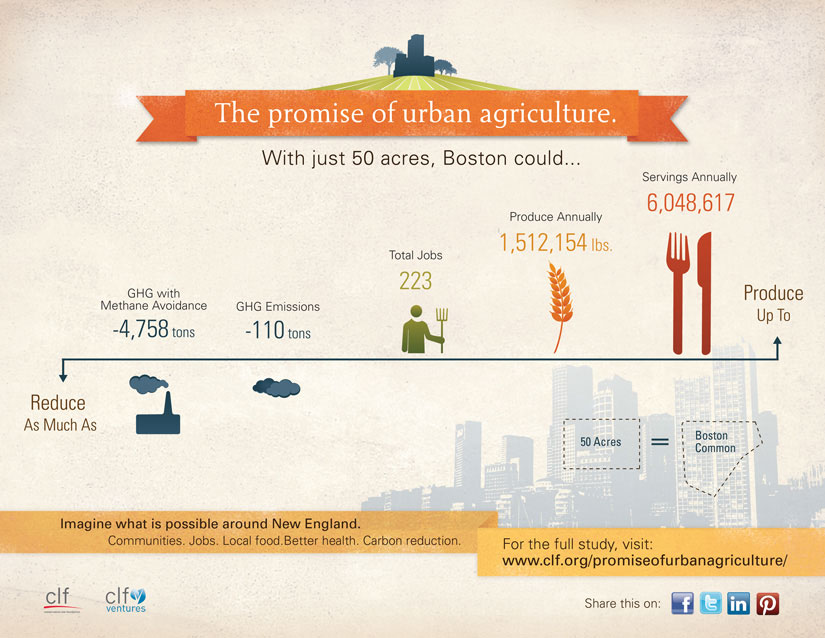
Pencil It In: Urban Agriculture and Access to Healthy Food

image courtesy of CLF

WHEN: Wednesday, July 24, 2013, 6:00 PM - 8:00 PM  (click here for other dates and times, as there will be multiple meetings to discuss this issue in different neighborhoods)

WHERE: Copley Branch BPL (Raab Hall), 700 Boylston St., Boston Back Bay

WHY: Join your neighbors at a meeting regarding the development of a new section of the Zoning Code by the City of Boston to address the growing interest in urban agriculture. This is your chance to voice your opinions for urban farming and access to healthy food!

They will be discussing about commercial ground level and rooftop farms, farmers markets and farm stands, aquaculture, hydroponics, aquaponics, farm composting, farm soil safety, and conditions for backyard keeping of hens and bees. Learn more here.

Wednesday, May 1, 2013

Green Substitution: Swap Vaseline for Waxelene

image courtesy of thesimplemoms.com

I have very sensitive skin and am constantly battling eczema outbreaks (sorry if that is an overshare hah!). Last year, my doctor suggested that I protect the eczema-prone areas of my skin with Vaseline. My heart  dropped when she said this because I've been working for years to rid my cosmetic shelf of petroleum-based products! But, I have to agree with my doctor, that petroleum jelly was an effective skin protector. Luckily, a representative from Waxelene recently contacted me about their organic beeswax alternative to petroleum jelly. I received a sample in the mail and have been testing it out for a couple weeks - and despite a different consistency, Waxelene works just as well as traditional petroleum jelly.

Waxelene is a great product and is an alternative to petroleum jelly that provides all of the same benefits, but is safe for consumer health and the environment. If you're interested, check it out at the bath and body section of Whole Foods.

Friday, April 26, 2013

Earth Day Champion: Seaport Hotel


This past Monday, Earth Day,  Boston’s Seaport Hotel & World Trade Center celebrated with Laura Feddersen, of Green City Growers in Somerville & the Seaport’s Executive Chef, Richard Rayment, by planting Greek oregano, chives, onions, and radishes in their plaza-level organic garden. The organic garden will continue to provide herbs & vegetables for their customers at Aura Restaurant & TAMO Bar this season!

The Seaport Hotel & World Trade Center was recently honored by New Generation Energy at their Mint Party at TRADE.

Wednesday, April 24, 2013

Recap: The Future of Nature, Event 1: The Future of Food


On Earth Day, The Nature Conservancy and WBUR hosted a discussion panel on what the future of our food system will look like. Attendees gathered at the Artists for Humanity center in South Boston and mingled and grabbed some freebees from sponsors before hitting the appetizer table for an assortment of cheeses.

Eventually we took our seats and our moderator, Sacha Pfieffer of All Things Considered, took the stage. (Which, as NPR fan, was quite exciting!). The panel contained an interesting set of scientists, chefs, and agriculture specialists ready to share their thoughts on the current food system and what will need to change in order for future generations to get proper nourishment after the population reaches 9 Billion in 2050. Then, each panelists shared their thoughts:


-Not only do we need to think about feeding a population of 9 billion people, we need to think about how we will feed them well.
-To do this, we need to learn as a nation to eat less meat - not have meat be “the center of the plate.”
-Local food in certain regions can be extremely expensive which is not sustainable because businesses will have trouble making a profit.
-The best thing you can do as a consumer is to support businesses that are doing the right thing. 

David Cleary, Agriculture Strategy Director, The Nature Conservancy
-As China and India move into the “middle class” they are going to require more complex diets.
-Many of the environmental issues that negatively affect our food sources are man made. 
-To have a healthy agriculture system, we will need to abide by 4 principles: 
     1) manage soils properly 
     2) have natural habitats in and around farms 
     3) manage your imputs properly (water, fertilizers, etc.) 
     4) we need to build agriculture systems that will be resilient to climate change.


Paul Greenberg, Author, Four Fish: The Last Wild Food
-What we must do to ensure we have enough food in the future, is mostly a result of what we have already done to damage natural food systems.
-70% of all seafood Americans eat is in restaurants, so we need to learn to ask questions about our food.
-50% of all seafood we eat is farmed.
-Eat local seafood, not too much, mostly bivalves (good news for me, I LOVE oysters!)


Oran Hesterman, Author of Fair Food and Founder of the Fair Food Network
-Health problems and rampant obesity are caused by a broken food system.
-There are many great initiatives popping up all over the country to address this issue which gives us great hope for the future.
-Individuals and institutions need to make changes.
-The most important thing you can do is put pressure on the government to pass the Farm Bill


After each panelist gave their presentation, the audience was invited to ask questions. The resulting conversation spoke volumes - a majority of the questions were about GMOs. It seems as though the future of food will definitely involve biotechnology! Though the future of food presents some daunting tasks, I left the event that night feeling hopeful and empowered. I look forward to the rest of The Nature Conservancy’s Future of Nature Series. 


Monday, March 11, 2013

Farm Share Fair Meetup


Spring is almost here, which means its time to think about partaking in a CSA for the summer and fall! We are lucky there are so many small farms across New England to choose from. It can be hard to pick a CSA that best suits your needs, which is why The Boston Sustainable Food Meetup Group is hosting Farm Share Fair this Thursday:

What: Farm Share Fair
When: 5:30 pm - 8:30 pm
Where: Cambridge College, 1000 Massachusetts Avenue, Cambridge, MA
Why: To meet 40 New England CSA vendors/farmers

The event is free and open to the public. It is a great way to learn more about farm share programs if you've never done one before, or are looking for a change this spring.

Wednesday, February 27, 2013

Honest Tea Gets Fizzy

Honest Tea makes some of the most delicious, widely available, organic iced tea products. I especially love their orange mango ade which is slightly less sweet than competing brands. And now they are coming out with a line of sodas called Honest Fizz! Honest Fizz is a naturally sweetened, zero calorie soda that is also USDA organic. The varieties include: Lemon Limey, Orange Pop, Professor Fizz, and Root Beer.

I'm not usually a soda drinker, and I really don't like the taste of diet products. Honest Fizz still tastes a bit diety, but its a great alternative for when you have a soda craving. I'm planning to keep a stash of Honest Fizz in my fridge for just that reason, or for guests. For now, the sodas are sold exclusively at Whole Foods. If you love soda, give them a try. I'd love to hear what you think!