navigation

PhotobucketPhotobucketPhotobucketPhotobucket
Showing posts with label Lazy Chef. Show all posts

Wednesday, March 26, 2014

Spotlight: Veggie Planet

source image courtesy of Zagat

I don't think I quite understood how easy being a vegetarian is until visiting Veggie Planet in Harvard Square for the first time. New vegetarians often feel like they're "giving something up," - trust me, you won't get that feeling at Veggie Planet. Their vegetarian and vegan pizzas are satisfying, delicious, and unique (Peanut Curry Pizza, anyone?). Plus, Veggie Planet is a member of Cambridge Local First, a network of locally owned, independently run businesses that share a commitment to building a strong local economy and a vibrant, distinct community. Finally, you can truly feel good about chowing down on pizza!!!!


Wednesday, February 26, 2014

Cocobeet brings organic juices to Government Center


Yep, I am super into the green smoothie craze. Smoothies packed with kale, spinach, carrots, and beets are a great way to get a full day's nutrition in one sitting. And now there are a bunch of juice shops around Boston that can make smoothies to order and also offer ready-made beverages. One such business is newly-opened Cocobeet in City Hall Plaza. Cocobeet serves "organic, locally sourced, pure food meals and juices of the highest nutritional power." Cocobeet’s juices are raw and fresh. No pesticides or GMOs - and all of their juices are vegan! The only downside to Cocobeet is its prices - juices are $8 - $10, but I have to admit, they are totally worth the occasional splurge!

Tuesday, January 28, 2014

Tuesday, October 29, 2013

Eco Chocolates to Satisfy Your Halloween Cravings


1. Taza Chocolate
Locally made from fairly traded ingredients. Nom nom nom.

2. Unreal Candy
Your favorite candy bars, but this time without corn syrup, GMOs, or preservatives. (I have tested and approve these candies - they are delish).

3. Sweetriot
USDA organic and fair trade certified chocolate candy with a recyclable package - made not too far away in NYC.

Wednesday, October 16, 2013

Spotlight: Boston Organics


In honor of Fair Trade Month, this week's spotlight is on Boston Organics. Boston Organics is a grocery delivery service that provides organic and local produce, eggs, meat, and even fair trade coffee and chocolate! Boston Organics makes eating healthy super simple. Customers can choose from a variety of organic boxes: local foods, only veggies, only fruit, office boxes, etc. And there are difference box sizes so people can choose the price range that is right for them. (This is perfect for city dwellers with small households). 

The company not only provides organic and local foods to customers, but also is involved in many community initiatives, and is on a mission to lower their environmental impact. 

Finally, the Boston Organics website is great because it features weekly recipes and they have lively social media accounts. I, for one, love using Pinterest to store my recipes, so I was excited to see that Boston Organics has a frequently-updated account.  

Monday, August 19, 2013

New Perspectives: Diet Tips for Sustainable Living

source image courtesy of truthnhealth.com

The economy and the environment are affected by the foods humans consume. Foods that are grown locally should be supported because less fuel and resources required to transport food locally. Supporting nearby growers is made easier by joining a group that supports agriculture in the community, like a CSA.

Reduce the amount of meat that you eat. There are more resources required to take care of the animals until they are ready for slaughter. A pound of beef requires eight pounds of grain for production. A pound of chicken can be made with two pounds of grain making it more sustainable than beef. Less is required for seafood and fish; only a pound and a half for a pound of farm raised fish. Plant eating species such as trout, tilapia and catfish are the choices that are the most sustainable. These are productive and take up very little space. Compared to their plant eating counterparts, sea bass and tuna which are carnivorous, are not as sustainable. Avoid albacore tuna, Bluefin, marlin and swordfish, which are predators.

Shopping organic is a good choice because artificial fertilizers and pesticides are not used on organically raised plants. Animals that have not been given antibiotics or growth hormones to produce organic products such as eggs, milk, seafood and poultry; look for the product label to say “100% Organic”.

Raise your own. A little time and some space could allow you to have a vegetable garden or raise some chickens for eggs and poultry. You can have herbs in the kitchen or tomatoes and greens in a container garden if space is limited.

Reusable containers and bags are offered inexpensively. These can be used each time you shop. As an incentive, a few cents off  your purchase is given by some stores when you use your own bag. This also reduces the amount of bags that require production and keeps them out of the landfill.

Tammy Mahan is a freelance writer with 20 years of experience in the healthcare field. She enjoys writing for Healthline.com in her free time. 

Monday, July 8, 2013

New Perspectives: Edible Flowers in Your Backyard

Edible Flower Recipe
Image courtesy of Vegetable Gardener

When it comes to edible plants, people usually think of vegetable gardens and farms, but what manydo not realize is that the flowers we grow for beauty can sometimes have another purpose. Here are a few examples of flowers you may have in your yard that you could take a bite out of, if ya want:

1. Rose  – Everyone knows what a rose looks like, but did you know they were edible. Rose petals make a great colorful addition to salads and rose hips, the round part of the stem right below the bloom, are full of vitamin C. Rose hip tea is tasty and nutritious. You can also make jams and jellies out of rose hips and petals.

2. Lotus – The beautiful blooms and sweet pads of this pond plant are often the reason we have them, but there is more to the lotus than meets the eye. The seeds of the lotus plant were prized by Native Americans for their flavor and nutrition. You can eat them raw or roast them for a tasty treat. Make sure to remove the green centers before eating for the best flavor. Underwater shoots also form tubers which are eaten much like a potato. These are best to harvest in late summer or fall.

3. Sweet Alyssum  – The tiny clusters of white flowers mean that this little plant could be in your spring garden bed. But unlike its name the flavor of this plant is more like horseradish. A member of the mustard family, the flowers, stems, leaves and seed pods of this plant can be added to dishes for a spicy flavor. The leaves can also be cooked like mustard greens.

4. Canna Lily –These large flowering plants are hardy and colorful so it is no wonder so many homes have them in their gardens. The large leaves look much like banana leaves and can be used similarly to wrap food for cooking. The young shoots are edible if cooked, but the roots of the plant are your best bet for food. These tubers have even higher starch content then potatoes and can easily be ground into gluten free flour.

5. Redbud  – Last on our list is actually a flowering tree. The redbud’s flowers appear directly on the branches in the spring and are edible. Open flowers have a sweet flavor and a beautiful purple-pink color. After the flowers drop off seed pods appear. These pods can be used just like pea pods in stir fries and other dishes. After a couple of weeks they become hard and unpalatable, so harvest quickly!

This is a guest post by Liz Nelson from WhiteFence.com. She is a freelance writer and blogger from Houston. Questions and comments can be sent to: liznelson17@gmail.com.

Wednesday, April 24, 2013

Recap: The Future of Nature, Event 1: The Future of Food


On Earth Day, The Nature Conservancy and WBUR hosted a discussion panel on what the future of our food system will look like. Attendees gathered at the Artists for Humanity center in South Boston and mingled and grabbed some freebees from sponsors before hitting the appetizer table for an assortment of cheeses.

Eventually we took our seats and our moderator, Sacha Pfieffer of All Things Considered, took the stage. (Which, as NPR fan, was quite exciting!). The panel contained an interesting set of scientists, chefs, and agriculture specialists ready to share their thoughts on the current food system and what will need to change in order for future generations to get proper nourishment after the population reaches 9 Billion in 2050. Then, each panelists shared their thoughts:


-Not only do we need to think about feeding a population of 9 billion people, we need to think about how we will feed them well.
-To do this, we need to learn as a nation to eat less meat - not have meat be “the center of the plate.”
-Local food in certain regions can be extremely expensive which is not sustainable because businesses will have trouble making a profit.
-The best thing you can do as a consumer is to support businesses that are doing the right thing. 

David Cleary, Agriculture Strategy Director, The Nature Conservancy
-As China and India move into the “middle class” they are going to require more complex diets.
-Many of the environmental issues that negatively affect our food sources are man made. 
-To have a healthy agriculture system, we will need to abide by 4 principles: 
     1) manage soils properly 
     2) have natural habitats in and around farms 
     3) manage your imputs properly (water, fertilizers, etc.) 
     4) we need to build agriculture systems that will be resilient to climate change.


Paul Greenberg, Author, Four Fish: The Last Wild Food
-What we must do to ensure we have enough food in the future, is mostly a result of what we have already done to damage natural food systems.
-70% of all seafood Americans eat is in restaurants, so we need to learn to ask questions about our food.
-50% of all seafood we eat is farmed.
-Eat local seafood, not too much, mostly bivalves (good news for me, I LOVE oysters!)


Oran Hesterman, Author of Fair Food and Founder of the Fair Food Network
-Health problems and rampant obesity are caused by a broken food system.
-There are many great initiatives popping up all over the country to address this issue which gives us great hope for the future.
-Individuals and institutions need to make changes.
-The most important thing you can do is put pressure on the government to pass the Farm Bill


After each panelist gave their presentation, the audience was invited to ask questions. The resulting conversation spoke volumes - a majority of the questions were about GMOs. It seems as though the future of food will definitely involve biotechnology! Though the future of food presents some daunting tasks, I left the event that night feeling hopeful and empowered. I look forward to the rest of The Nature Conservancy’s Future of Nature Series. 


Monday, March 11, 2013

Farm Share Fair Meetup


Spring is almost here, which means its time to think about partaking in a CSA for the summer and fall! We are lucky there are so many small farms across New England to choose from. It can be hard to pick a CSA that best suits your needs, which is why The Boston Sustainable Food Meetup Group is hosting Farm Share Fair this Thursday:

What: Farm Share Fair
When: 5:30 pm - 8:30 pm
Where: Cambridge College, 1000 Massachusetts Avenue, Cambridge, MA
Why: To meet 40 New England CSA vendors/farmers

The event is free and open to the public. It is a great way to learn more about farm share programs if you've never done one before, or are looking for a change this spring.

Thursday, March 7, 2013

Vegetarian Recipe Roundup: Brussels Sprouts!

Parmesan Brussels Crustini
parmesan brussels sprout crostini
image & recipe courtesy of www.howsweeteats.com

YIELD:  25-30 PIECES
TIME: 30 MINUTES IF GARLIC IS ALREADY ROASTED

INGREDIENTS:
4 bulbs roasted garlic
1 large baguette
4 tablespoons olive oil
1 pound brussels sprouts, sliced or shredded
1/4 teaspoon salt
1/4 teaspoon pepper
pinch of nutmeg
2 tablespoons freshly grated parmesan cheese
shaved parmesan cheese for topping

INSTRUCTIONS:
1. If needed, you can roast garlic ahead of time! A day or two is fine. After roasted, let the garlic cool then squeeze the cloves out, making sure to remove any of the paper. Use a fork and mash the garlic well until it is creamy and spreadable.
2. Preheat oven to 350 degrees F. Slice baguette into 1/2-inch rounds and place on a baking sheet. Drizzle with 2 tablespoons of olive oil. Bake for 8-12 minutes, rotating the pan halfway through.
3. While the bread is toasting, heat a large skillet oven medium heat. Add remaining olive oil, then toss in brussels sprouts, salt, pepper and nutmeg, tossing well to coat. Cook for 10 minutes, stirring occasionally, until warm, wilted, slightly crispy and even a little golden. Stir in grated parmesan cheese, mixing well to coat and turn off heat.
4. Spread a bit of mashed roasted garlic onto each piece of crostini. To serve, top crostini with a spoonful of sprouts, then add a shaving of fresh parmesan cheese and some cracked black pepper.

Balsamic Roasted Brussels Sprouts
Balsamic-roasted brussels sprouts
image & recipe courtesy of blogs.kqed.org/bayareabites

INGREDIENTS:
1 pound of Brussels sprouts
1/8 cup pine nuts, finely diced
Balsamic vinegar
Olive oil
Parmesan cheese


INSTRUCTIONS:
1. Trim and peel away the outer leaves of each Brussels sprout and then half them.

2. Slide the Brussels sprout halves onto the skewers, about six to eight halves per skewer.
3. Line a baking dish with parchment paper and places the skewers halved-side up.


4. Drizzle olive oil and balsamic vinegar over each skewer, trying to “fill up” the Brussels sprouts.
5. Bake the skewers at 400 degrees for about 30 minutes until they are cooked and crispy.
6. Plate the skewers on a serving tray and cover them with shaved Parmesan and the pine nuts.

Lemon Garlic Brussels Sprouts
Lemon Garlic Brussel Sprouts
image & recipe courtesy of whatsgabycooking.com

INGREDIENTS:
2 lb Brussel Sprouts
4 tbsp olive oil
5 cloves garlic, minced
1 lemon, juiced and zested
3 tbsp gruyere, grated
sea salt
pepper

INSTRUCTIONS:
1. Clean the brussels sprouts by trimming off the ends and peeling the outer layer of the sprout off. Cut each one in half.
2. Heat the oil in a large skillet over medium high heat.
3. Once heated, add the halved brussel sprouts to the pan and saute for about 7-8 minutes on each side until the outer part is a caramelized brown and the inside is soft and fully cooked.
4. Add the garlic half way through the cooking.
5. Reduce the heat to low and add the lemon zest, juice, salt and pepper.
6. Stir to combine and taste. Adjust seasoning if needed. Add the cheese on top and serve.


Thursday, February 28, 2013

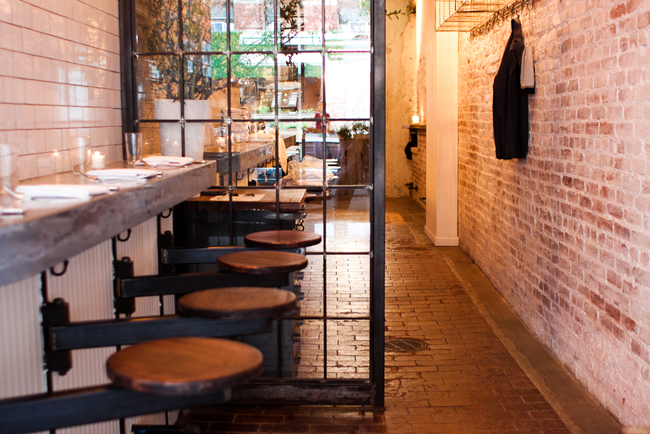
Restaurant Rave: The Fat Radish NYC


 image courtesy of  www.in-nycsite.com

While in New York City this past weekend, my hostess took me to a trendy dinner spot in the lower east side called The Fat Radish. I fell in love. The decor was cozy and simple and the menu was unique. The restaurant is very vegetarian friendly and specializes in healthy well-sourced food. Instead of serving bread before the meal, they serve radishes with a light drizzle of olive oil - delicious! What really intrigued me was that even in the middle of one of the biggest cities in the U.S., they are serving up lots of items from local farms. Many ingredients come from just outside the city - NY and New Jersey. My friend and I split the celery root pot pie and and the Montauk scallops. Both were incredible....we gobbled most of it up before I got a chance to snap a photo:


So next time you are in NYC, and looking to score points on your Practically Green account by eating at an eco-aware restaurant, check out The Fat Radish - it is now officially on my list of favorite restaurants!

Wednesday, October 24, 2012

Green Tea on the Go: Teas' Tea


I recently tried sample of Teas' Tea half & half green tea. It is delish! As many of you may know, I am a huge tea fan, but I am often discouraged by pre-bottled teas because they are often very sweet and are much more caloric than brewing it at home. I was pleasantly surprised with Teas' Tea because it wasn't too sweet and the flavors light and refreshing. It is still about 100 calories per bottle, but it can be a nice treat. My favorite was the half & half green tea with peach and my least favorite was the half and half green tea with coconut (but I'm not a huge fan of coconut water - if you are, you'll probably love this tea.) 

The company that produces Teas' Tea, ITO EN, has a detailed portion of their website dedicated to their corporate social responsibility initiatives. They have both environmental sustainability and human health and community goals. Even though I try to avoid purchasing single-serving beverage bottles, it is good to know that this is at least a responsible option. 

Thursday, October 11, 2012

Newton Restaurant to Celebrate Food Day on Oct. 24

Food Day is a nationwide series of events to celebrate a movement towards affordable, healthy, & sustainable foods. This year, Food Day will take place on October 24th. There are a bunch of Food Day events in the Boston area, but one that particularly caught my eye is the locally themed dinner hosted by Lumiere Restaurant in Newton.


Every Day is Food Day – October 24, 7:00 PM
($45/person; $15 for beverage pairing)


Let local, in-season ingredients shine with a menu that includes:
• Roasted Local Carrots with Cranberry-Maple Chutney
• Tagine of Vermont Veal, Local Root Vegetables and Maine Golden
Eye Beans with Dried Local Apricots and Lumière Preserved Lemons
• Lanni Orchards Apple Crumble with Maple Sugar Ice Cream and
Molasses Caramel
• Beverage Pairing: Pretty Things Beer

Looks yummy, and like a fun way to celebrate the local harvest season.

To find out what other Food Day events are happening around town, see the events page.

Tuesday, October 9, 2012

Butternut Squash: 4 Fall Vegetarian Recipes

Fall foods are my favorite. They're often warm, rich, recipes using local vegetarian ingredients. Below are four fantastic looking recipes using butternut squash as the main ingredient. I will definitely be trying these out over the next couple of months.


Butternut Squash and Goat Cheese Lasagne

Ingredients (1 serving)
1 cup cubed peeled butternut squash (cut into about 1/2-inch cubes)
1 tsp extra virgin olive oil
Kosher salt and freshly ground black pepper, to taste
1 tsp butter
1 tsp flour
1/3 cup 1% milk (preferably organic)
1 oz (about 2 Tbsp) soft goat cheese
1/4 cup 1% whipped cottage cheese
2 pinches ground nutmeg
1 no-boil lasagna noodle, cut into thirds (widthwise)
2 Tbsp shredded part-skim mozzarella cheese

Instructions
Preheat oven to 400°F. Toss the cubed butternut squash with olive oil and season to taste with salt and pepper. Lay in an even layer on a baking sheet and cook, turning halfway through, until soft and lightly browned, about 30 minutes.

Reduce oven heat to 350°F.

Lightly grease an individual baking dish.

Heat butter in a small saucepan set over medium heat. Whisk in the flour and cook, whisking, for 30 seconds. Add in the milk and cook, whisking, until slightly thickened, about 2 minutes. Remove from heat and whisk in soft goat cheese until fully melted. Season sauce to taste with salt and pepper. Stir in a pinch of ground nutmeg.

In a small bowl, season cottage cheese to taste with salt and pepper. Stir in a pinch of ground nutmeg.
Spoon about 1 Tbsp of the goat cheese sauce into the bottom of the prepared dish. Top with 1 piece of noodle. Spread half of the cottage cheese over the noodle.

Evenly scatter half of the roasted butternut squash over the cottage cheese and top with about 2 Tbsp of the goat cheese sauce.

Repeat the layers, starting with a second noodle piece followed by the remaining cottage cheese, remaining butternut squash, another 2 Tbsp goat cheese sauce, and ending with the final piece of noodle. Top with the remaining goat cheese sauce and shredded mozzarella.

Bake at 350°F until cheese is bubbly, about 20 minutes.

Let stand at room temperature for at least 15 minutes before eating.


Butternut squash vegetarian chili


Ingredients
1 medium red onion, chopped
2 red bell peppers, chopped (or equivalent jarred roasted red peppers)
1 small butternut squash (less than 1 1/2 pounds), peeled and chopped
4 garlic cloves, minced
2 tablespoons olive oil
ground sea salt
1 tablespoon chili powder
1 teaspoon ground cumin
1/2+ tablespoon chopped chipotle in adobo* (start with 1/2 tablespoon and add more to taste, I thought mine was just right with 1 tablespoon)
1 bay leaf
1/4 teaspoon ground cinnamon
14-ounces canned diced tomatoes, including the liquid**
4 cups cooked black beans or 2 cans, rinsed and drained
2 cups OR one 14 oz. can vegetable broth
2 Avocados from Mexico, diced
cilantro (optional, for garnish)
3 corn tortillas for crispy tortilla strips***

Instructions
In a 4 to 6 quart Dutch oven or stockpot, sautée the chopped vegetables (onion, bell pepper, butternut squash, garlic) in one to two tablespoons of olive oil on medium-high heat. You’ll need to stir the ingredients every few minutes so they can cook evenly.

Once the onions start turning translucent, turn the heat down to medium-low. Add all of the spices and canned ingredients, and stir. Cover for about one hour, stirring occasionally. Taste test for spice level and add more chipotle if desired.

By the time your chili is done, the butternut squash should be nice and tender and the liquid should have reduced a bit, producing the hearty chili consistency that we all know and love.

Make the crispy tortilla strips: stack the corn tortillas and slice them into thin little strips, about 2 inches long. Heat a small pan over medium heat, add a drizzle of olive oil and toss in the tortilla slices. Sprinkle with salt and stir. Cook until the strips are crispy and turning golden, stirring occasionally, about 4 to 7 minutes. 

Remove tortilla strips from skillet and drain on a plate covered with a piece of paper towel.
Serve the chili in individual bowls, topped with crispy tortilla strips and plenty of diced avocado. I added a little sprinkle of red pepper flakes (optional). You might want to serve this along with some chipotle hot sauce (Tobasco makes one) for the spice addicts like myself.

Notes
Serves 3 to 4. This chili is very hearty, but feel free to add another can of tomatoes or more vegetable broth if you want to thin it out a bit. Double the recipe for a crowd.
*Chipotle in adobo sauce is usually found in the Mexican section of the grocery store. I never need a whole can at once, so I use what I need and then transfer the rest to a small freezer bag, pressing it flat so that I can pull off as much as I need later.
**Find BPA-free cans of diced tomatoes if possible.
***Look for corn tortillas that contain minimally processed ingredients. There should only be about 5 ingredients listed, and wheat shouldn’t be one of them.


Butternut Squash Pizza with Crispy Sage

Ingredients (Yield = one 12-inch pizza)
1 small butternut squash (about a pound, but you will likely have leftover squash)
olive oil
kosher salt
2 cloves garlic
fresh ricotta cheese
a few sprigs thyme, leaves removed
1/4 cup freshly grated Parmigiano Reggiano
10-15 sage leaves
canola oil for frying
Pre-made or Homemade pizza dough

Instructions
1. Preheat the oven to 400ºF. Remove the skin: Slice the top of the squash about 1/2-inch under the stem to create a flat edge. Repeat with the other end. Cut crosswise through the squash just above the bulb — cutting the squash into two pieces makes the peeling process easier. Note: I made only one pizza, so I only peeled the longer portion (the non bulb portion) of the butternut squash. Stand the squash (whichever piece you want to peel first) upright and, being careful not to slice off your fingers, run your knife down the sides of the squash removing the peel along the way. Repeat with bulb portion if desired. After peeling the bulb portion, cut it in half, scoop out seeds and discard. Cut the peeled squash crosswise into 1/4-inch thick slices. I used a mandoline, which saves time and creates uniform pieces, but using a knife works just fine, too.

2. Place the slices of squash on a baking sheet, drizzle with olive oil, season with kosher salt to taste, toss to coat, redistribute onto sheet in one layer and place in the oven for about 20 minutes, or until fork tender.

3. Meanwhile, peel and finely chop the garlic and add it to about 1/4 cup of olive oil. After rolling out a pizza round and placing it on a prepared baking sheet (see recipe above), brush dough with the garlic olive oil. (I spooned some of the oil into the center of the dough and then, using the back of my spoon, spread it over the dough to coat evenly.) Spread a thin layer of fresh ricotta over the garlic oil. Sprinkle with fresh thyme to taste. Top with baked squash slices. Top with grated Parmigiano. Bake for 8 to 10 minutes.

4. Meanwhile, fry the sage. The book recipe does not give detailed instructions for this step, and after a few burnt batches of leaves, I turned to the internet for some advice. The sage leaves should take no longer than 5 seconds in hot oil to crisp up. I didn’t use a thermometer or a deep fryer, so it was a trial and error process, but I found that frying the leaves one at a time in a small sauté pan filled with a layer of canola oil worked well ultimately. I had to take the pan off the heat every so often, but once I got the hang of it, it was a simple process and well worth the effort — the crispy sage adds a really nice flavor.

5. Remove the pizza from the oven and top with the crispy sage. Yum!


Fall Recipe- twice baked butternut squash

Ingredients
6 butternut squash (about 9 pounds total)
1 1/2 teaspoons salt, plus more to taste
1/2 teaspoon freshly ground black pepper, plus more to taste
1/2 cup plus 1 tablespoon nonfat sour cream
2 teaspoons paprika
6 fresh chives, cut into 1/8-inch pieces
3 tablespoons fresh breadcrumbs, lightly toasted

Instructions
Heat oven to 450 degrees with the rack in center. Halve squash lengthwise, and remove seeds and fibers. Sprinkle squash halves with 1/2 teaspoon salt and 1/4 teaspoon pepper. Fill a roasting pan with 1/4 inch water. Place squash in pan. Cover with aluminum foil, and bake until squash is tender when pierced with the tip of a knife, 35 to 45 minutes. 

Remove from oven, transfer squash to a cool surface, and let cool enough to handle. Reduce oven temperature to 425 degrees.

Use a spoon to scoop baked flesh out of each half into a large bowl, leaving a 1/4-inch border around six of the halves so they will keep their shape. To the bowl, add sour cream, paprika, chives, and remaining teaspoon salt and 1/4 teaspoon pepper. Mix with a handheld electric mixer or potato masher until smooth and well combined. Season with salt and pepper. 

Fill six squash halves with mixture (discard remaining six empty halves). Sprinkle tops with toasted breadcrumbs. Bake until golden brown and warm throughout, 20 to 30 minutes. Serve.





Wednesday, September 12, 2012

Organic Menu Options at Cafeteria Boston

One of Newbury St.'s trendiest bistros is also eco-friendly. Cafeteria Boston has clearly identifiable organic meal options (not to mention numerous vegetarian and gluten free options). All beef and lamb is organic and grass fed, and all chicken is free range. Cafeteria also uses local produce whenever possible.

I went last night and had a glass of white sangria and the fig & goat cheese pizza. It was fantastic! I highly recommend Cafeteria - delicious, affordable, and eco-savvy.

Tray Chic


Monday, August 27, 2012

Thanks Boloco!

Boloco is setting a great example for restaurants in Boston. Not only are they green certified, but they also promote sustainable behavior:


 Their burritos are TO DIE FOR and they accept LevelUp!

Friday, August 24, 2012

Taranta for Boston Restaurant Week

This week and next week are Boston Restaurant Week(s)! My roommate, Liz, and I decided to use this opportunity to check out an upscale green certified restaurant. So last night we went to Taranta on Hanover St. in the North End. I've been meaning to check out Taranta for a long time, not only because they compost, have organic menu options, and serve biodynamic wines, but also because their fare is quite unique - it is Peruvian/Italian fusion! 

We started with mussels and beef anticucho, then for our main courses, we had the Salvadorian Influenced El Pollo and the Grilled Skirt Steak: 


However, by far the best part of the meal was dessert: lucuma tiramisu and a guava cannoli!!! Dinner was fabulous and it felt great to support a restaurant with sustainable practices.

Taranta and Miel are the only Green Certified restaurants participating in Boston Restaurant Week. 


Tuesday, May 22, 2012

How to Use Herbs

Since I live in a small apartment in the North End, I don't have room for a full-fledged veggie garden. But I do grow herbs on my kitchen window sills. Having fresh homegrown herbs like basil is such a nice addition to many summer dishes. Here is a cute illustrated guide about how to use the most common herbs:

image courtesy of Illustrated Bites


Wednesday, April 11, 2012

Easy Vegetarian Hors D'oeuvres

Pinterest is full of all sorts of recipe ideas, but lately I've been drawn to simple vegetarian appetizers! I must try these:


pears with goat cheese, craisins, and pistachios 

berry and goat cheese bruschetta 

English muffin pizzas with spinach and mozzarella 

watermelon cubes with feta and mint

All are easy for "lazy chefs" and can be made with organic ingredients! Yum!